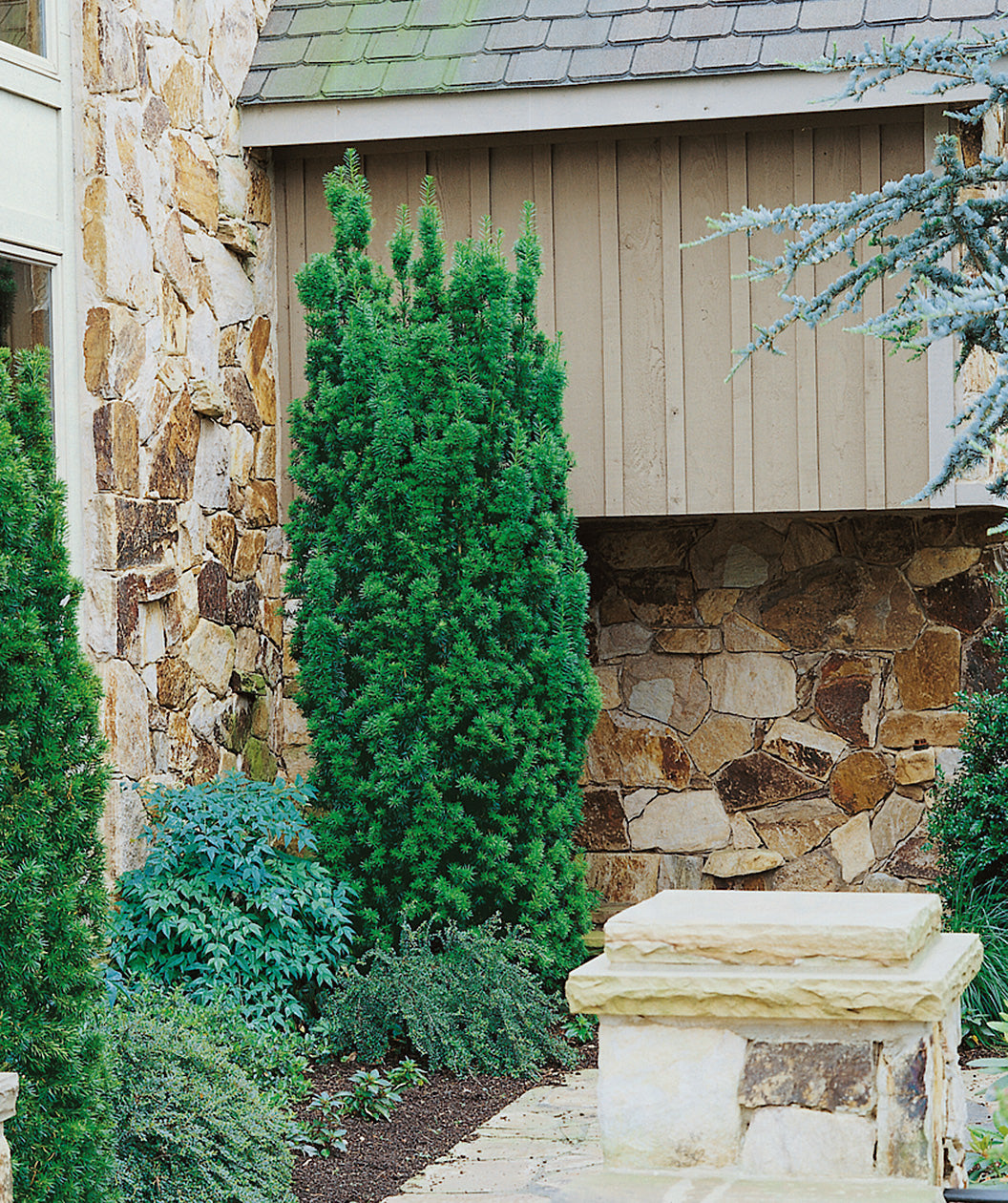



A tall, narrow yew with deep green needles and a clean upright form that brings instant evergreen structure
FEATURES:
- Beautiful evergreen, dark green foliage provides privacy all year round
- Red berries cover the plant in early fall, a welcome snack for songbirds
- Ideal when planted as a tall hedge, on either side of your entryway or as a border planting
- Low maintenance and easy care
-
Hand Selected, Fresh from the Grower
- Ships on our trucks because the size of the tree - does not fit in a box.
Bower & Branch Landscape Design Tip:
For a classic, high-end look, use upright evergreens as “bookends.” A pair near a front walk or entry instantly frames the space and makes the whole landscape feel more intentional.
Photo Credit: ©Nova-Photo-Graphik GmbH® Hick's Upright Yew
Growth Facts
- Hardiness Zone: 4-7
- Mature Height: 10-12' tall
- Mature Width: 3-4' wide
- Exposure: Full Sun/Part Shade
- Spacing: 3-4' apart
Hick's Upright Yew
Bower & Branch Trees and Plants
Taxus x media 'Hicksii'
Regular price| Quantity | Automatic Savings |
|---|---|
| Buy 2 | Save $200 |
| Buy 3 | Save $500 |
| Buy 4 | Save $800 |
| Buy 6 | Save $1800 |
| Buy 10 or more | Save $4000 |

Plant with Confidence when choosing Big & Tall Trees and Hedges!
A tall, narrow yew with deep green needles and a clean upright form that brings instant evergreen structure
FEATURES:
- Beautiful evergreen, dark green foliage provides privacy all year round
- Red berries cover the plant in early fall, a welcome snack for songbirds
- Ideal when planted as a tall hedge, on either side of your entryway or as a border planting
- Low maintenance and easy care
-
Hand Selected, Fresh from the Grower
- Ships on our trucks because the size of the tree - does not fit in a box.
Bower & Branch Landscape Design Tip:
For a classic, high-end look, use upright evergreens as “bookends.” A pair near a front walk or entry instantly frames the space and makes the whole landscape feel more intentional.
Photo Credit: ©Nova-Photo-Graphik GmbH® Hick's Upright Yew
Growth Facts
- Hardiness Zone: 4-7
- Mature Height: 10-12' tall
- Mature Width: 3-4' wide
- Exposure: Full Sun/Part Shade
- Spacing: 3-4' apart
Why plant Hick's Upright Yew?
This versatile Yew has been the long-standing traditional privacy screening, but there is so much more to this Yew that meets the eye. Manicuring and trimming is a breeze as it loves to show its shining evergreen leaves all over your garden as a tall hedge, garden border, or an elegant entryway. Its sophisticated foliage colors of dark greens to golden at the tip adds a striking presence to your landscape. Even the songbirds are happy with your choice as they enjoy the red fruit in early fall. No garden is complete without at least one Hick's Upright Yew.
In England, Yew was restricted only to churchyards where livestock wouldn't be found grazing because it is toxic to the animals. Shakespeare was also familiar with the toxic qualities of Yew when he had Macbeth concoct a poisonous brew which included, "slips of yew, silvered in the moon's eclipse."
How to use Hick's Upright Yew in the landscape?
Hick's Upright performs well in full to part sun and is even known to be an excellent evergreen choice for shady areas. This yew is also a great addition to landscape borders, a specimen, or even a privacy hedge!
Planting Zones
Hardiness Zone: 4-7

How To Plant Hick's Upright Yew
Hick's Upright enjoys growing in soil that is moist but also well-draining; no soggy feet for this guy! A versatile evergreen, Hick's tolerates urban conditions as long as there is protection from the cold winter wind.
How To Water
Hick's Upright Yew will need to be watered deeply and regularly when first planted. Once established, its watering needs will lessen!
How To Prune
Prune Hick's in early spring before new growth sprouts.
Frequently Asked Questions
Yews do not have showy blooms. They produce small, inconspicuous flowers, and female plants may develop red berry-like arils. This yew is grown for evergreen foliage and its upright form.
Only female yews can produce the red arils, and fruiting depends on having a male yew nearby for pollination. Whether berries appear or not, the main appeal is the dense evergreen foliage and vertical shape.
Yes. Yews respond well to pruning. Lightly shape in late winter or after the first flush of spring growth to maintain a tight outline. Avoid heavy pruning during extreme heat or drought stress.