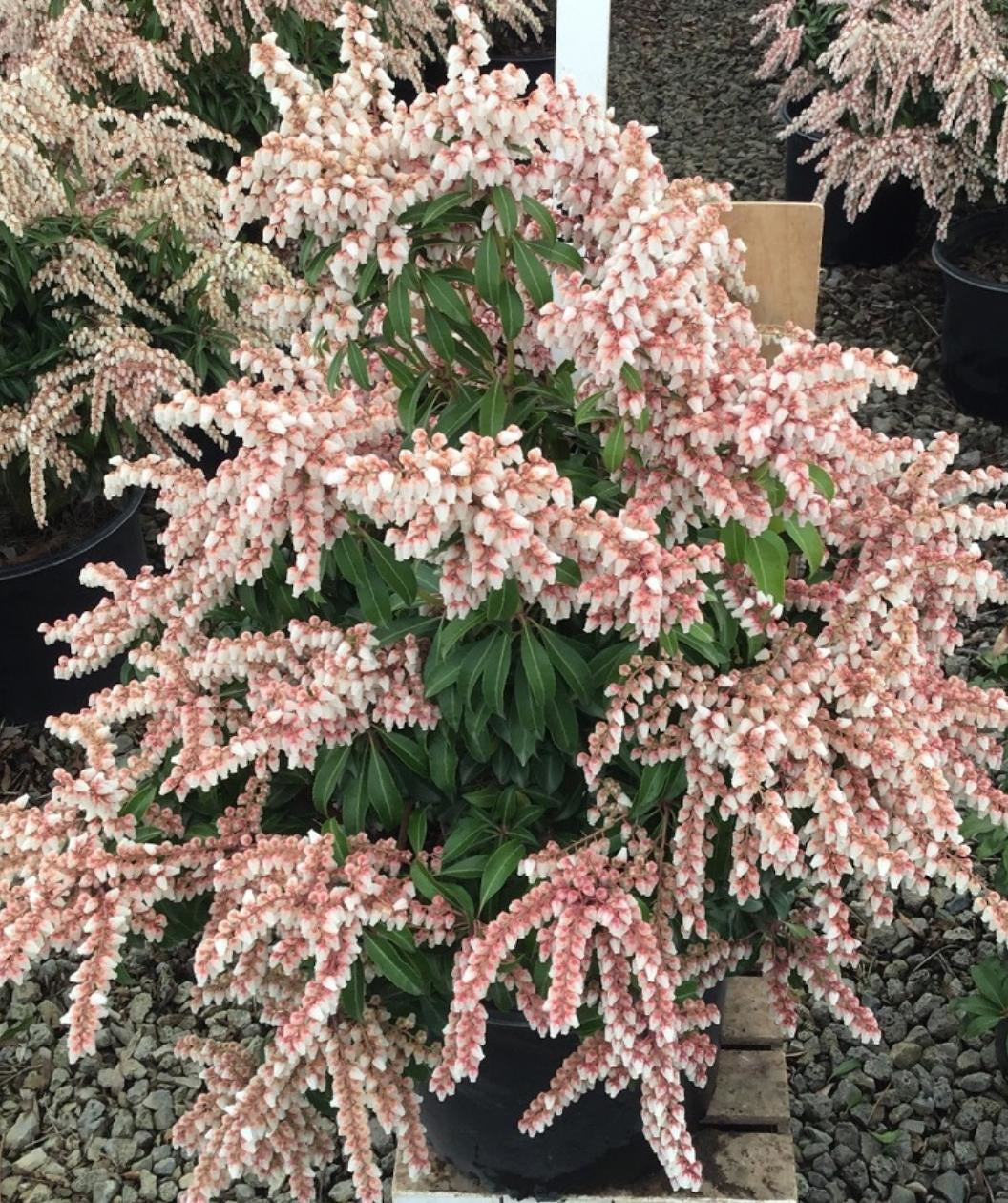


Glossy evergreen leaves and deep rosy spring clusters, a shade-garden staple with year-round polish and a little bit of drama
FEATURES:
- Deep rose to pink spring flower clusters that hang like delicate lanterns
- Evergreen, glossy foliage for year-round structure in shade and part shade spaces
- Red-bronze new growth that adds extra seasonal color before maturing to green
- Perfect companion for azaleas and rhododendrons in acid-loving garden beds
- Excellent foundation shrub for woodland edges and sheltered entry plantings
- Fall and winter interest with evergreen leaves and buds that set up the next bloom show
- Hand Selected; Fresh from the Grower
- Ships on our trucks because the size of the tree - does not fit in a box.
Bower & Branch Landscape Design Tip:
In shade gardens, texture is your secret weapon. Combine this glossy evergreen with matte, soft-leaved companions like ferns and hostas, then add one plant with big, bold leaves (think hydrangea) to create a layered look that feels lush and designed. It’s like styling an outfit: shine, softness, and one statement piece.
Growth Facts
- Hardiness Zone: 5-8
- Mature Height: 4-5' tall
- Mature Width: 3-4' wide
- Exposure: Full Sun/Part Shade
- Spacing: 3-4' apart
Glossy evergreen leaves and deep rosy spring clusters, a shade-garden staple with year-round polish and a little bit of drama
FEATURES:
- Deep rose to pink spring flower clusters that hang like delicate lanterns
- Evergreen, glossy foliage for year-round structure in shade and part shade spaces
- Red-bronze new growth that adds extra seasonal color before maturing to green
- Perfect companion for azaleas and rhododendrons in acid-loving garden beds
- Excellent foundation shrub for woodland edges and sheltered entry plantings
- Fall and winter interest with evergreen leaves and buds that set up the next bloom show
- Hand Selected; Fresh from the Grower
- Ships on our trucks because the size of the tree - does not fit in a box.
Bower & Branch Landscape Design Tip:
In shade gardens, texture is your secret weapon. Combine this glossy evergreen with matte, soft-leaved companions like ferns and hostas, then add one plant with big, bold leaves (think hydrangea) to create a layered look that feels lush and designed. It’s like styling an outfit: shine, softness, and one statement piece.
Growth Facts
- Hardiness Zone: 5-8
- Mature Height: 4-5' tall
- Mature Width: 3-4' wide
- Exposure: Full Sun/Part Shade
- Spacing: 3-4' apart
Why plant Dorothy Wycoff Japanese Pieris?
Dorothy Wycoff Japanese Pieris (a.k.a. Dorothy Wycoff Pieris) will make an elegant addition to your entryway garden, foundation plantings, patio area, or anywhere four-season appeal is a high priority. This classy broadleaved evergreen will bring color to your garden all winter with its lustrous bronzy foliage, which turns to green when the weather warms. In early spring, chains of small urn-shaped pink blossoms will spill out from deep red buds and exude a wonderful light perfume. Compact, sleek, and tidy, Dorothy Wycoff looks at home in formal landscapes both contemporary and traditional and is a smart choice in those intimate outdoor living areas where space is at a premium.
Japanese Pieris is often called Andromeda, although few who use that name realize the rather gruesome story behind it. According to Greek myth, Andromeda was a beautiful princess who was chained to a rock as an offering to a sea monster. The “chains” of flowers on this plant represent her own chains. (We’re happy to report that Perseus rescued the fair maiden before any harm was done.) You may prefer to call this plant the Lily of the Valley Bush, another common name for it. Pieris is native to Japan, Taiwan, and eastern China, though the selection known as ‘Dorothy Wycoff’ arose in the U.S. It originated in New Jersey in 1953 and was jointly introduced by a New Jersey and a Maryland nursery in 1960.
How to use Dorothy Wycoff Japanese Pieris in the landscape?
Japanese Pieris is in the same family as Rhododendrons, Azaleas, and Blueberries. This family of plants in general likes moist but well-drained, acid soils with lots of organic matter, and Dorothy Wycoff Pieris is no exception. Many of these plants also like afternoon shade in hot climates, and it is in a bit of shade where this Pieris shines its brightest. If Azaleas and Rhododendrons do well in your area, then Dorothy Wycoff may be a natural to invite into your landscape.
Planting Zones
Hardiness Zone: 5-8

How To Plant Dorothy Wycoff Japanese Pieris
Not a plant for regions with extremes of heat and cold, Pieris prefers the more moderate temperatures of its Japanese homeland and does best where those conditions can be replicated. Plant Dorothy Wycoff Pieris in acidic, moisture-retentive but not boggy soil in a site protected from both intense afternoon sunlight and strong winds. Heavy clay soils that retain too much water invite a deadly root rot disease. On the other hand, drought can take its toll, too. Applying an organic mulch and providing a steady supply of water will help give Dorothy Wycoff what it needs to thrive.
How To Water
Water this plant weekly, in times of hot and dry weather increase your watering regime.
How To Prune
Plants should be pruned in the late spring, just after flowering. Cut the branches above a set of leaves.
Frequently Asked Questions
The blooms are a deep rose to pink, appearing in clustered, cascading panicles in spring. The flowers have that classic pieris “lily-of-the-valley” look, just with richer color.
It prefers acidic, well-drained soil with consistent moisture. It’s a great match for other acid-loving plants like azaleas and rhododendrons. Mulch helps keep roots cool and evenly moist, just keep mulch a few inches away from the stems.
Prune right after flowering if you need to shape it or remove any winter damage. Avoid late-season pruning, since pieris sets buds for next year’s flowers. Light, selective pruning keeps it neat without sacrificing bloom.