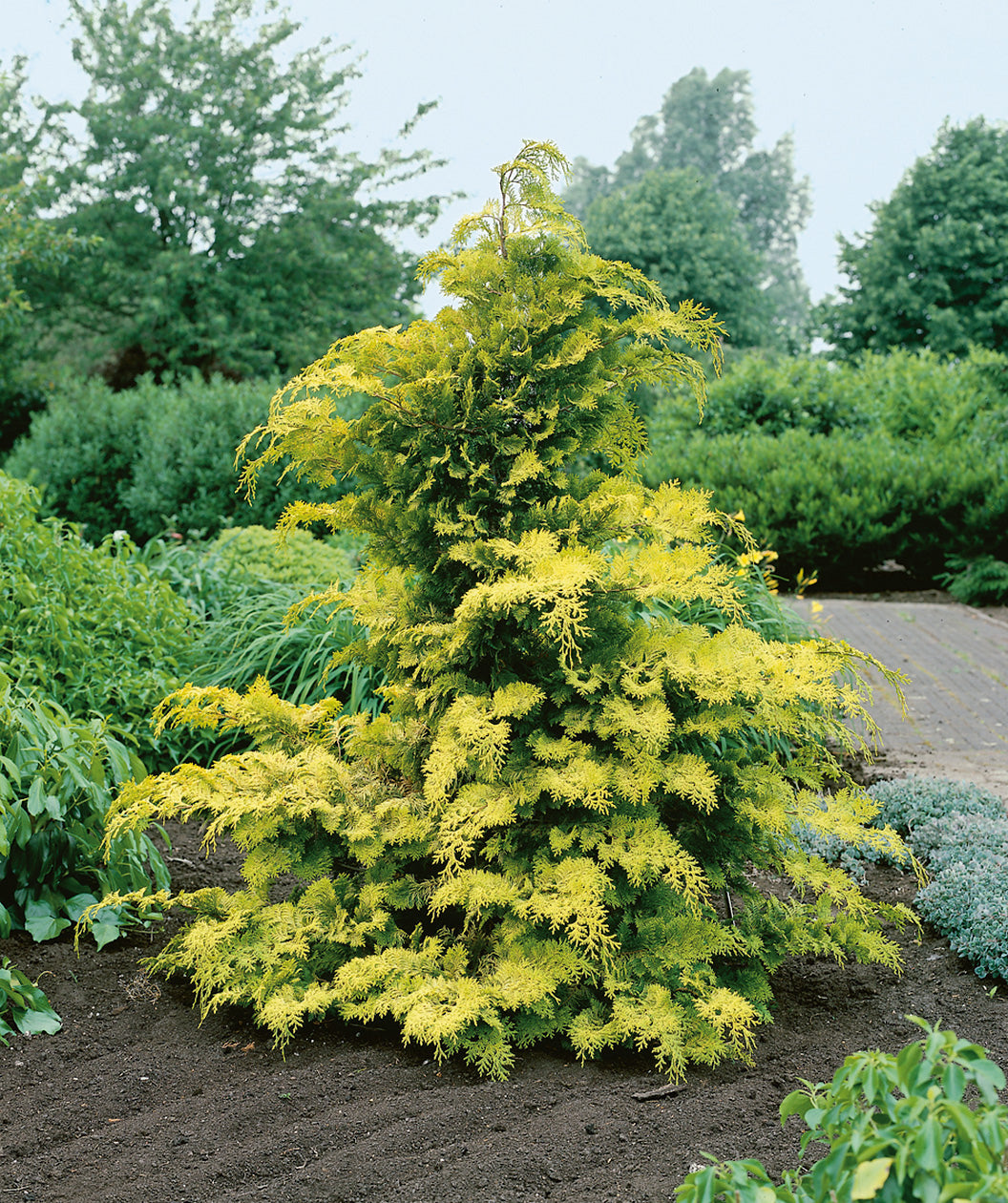



A golden evergreen with softly layered foliage that brightens the garden all year, like sunshine caught in a conifer
FEATURES:
- Rich green sprays tipped in gold for luminous, year-round color
- Naturally upright, pyramidal form with graceful, layered texture
- Excellent evergreen focal point for beds, corners, and entry plantings
- Deer resistant and low maintenance once established
- Slow to moderate growth with a refined, sculptural look
- Holds color best in full sun with protection from harsh winter winds
- Hand selected fresh from our grower
- Ships in a plant-safe designed box
Bower & Branch Landscape Design Tip
To keep the best color and healthiest growth, plant Crippsii in full sun with well-drained soil, and avoid soggy planting sites. Mulch around the base to protect roots and retain moisture, keeping mulch away from the trunk. Water consistently while the tree is establishing, then deep water during dry stretches as needed. Crippsii rarely needs pruning, but you can lightly shape in late winter if desired. Pair it with darker evergreens and fine-textured grasses for a layered look that feels sophisticated, balanced, and bright.
Photo Credit: ©Nova-Photo-Graphik GmbH® Crippsii Hinoki Cypress
Growth Facts
- Hardiness Zone: 6-9
- Mature Height: 15-20' tall
- Mature Width: 6-8' wide
- Exposure: Full Sun/Part Shade
- Spacing: 4-6' apart
Crippsii Hinoki Cypress
Bower & Branch Trees and Plants
Chamaecyparis obtusa 'Crippsii'
Regular price
Plant with Confidence when choosing Big & Tall Trees and Hedges!
A golden evergreen with softly layered foliage that brightens the garden all year, like sunshine caught in a conifer
FEATURES:
- Rich green sprays tipped in gold for luminous, year-round color
- Naturally upright, pyramidal form with graceful, layered texture
- Excellent evergreen focal point for beds, corners, and entry plantings
- Deer resistant and low maintenance once established
- Slow to moderate growth with a refined, sculptural look
- Holds color best in full sun with protection from harsh winter winds
- Hand selected fresh from our grower
- Ships in a plant-safe designed box
Bower & Branch Landscape Design Tip
To keep the best color and healthiest growth, plant Crippsii in full sun with well-drained soil, and avoid soggy planting sites. Mulch around the base to protect roots and retain moisture, keeping mulch away from the trunk. Water consistently while the tree is establishing, then deep water during dry stretches as needed. Crippsii rarely needs pruning, but you can lightly shape in late winter if desired. Pair it with darker evergreens and fine-textured grasses for a layered look that feels sophisticated, balanced, and bright.
Photo Credit: ©Nova-Photo-Graphik GmbH® Crippsii Hinoki Cypress
Growth Facts
- Hardiness Zone: 6-9
- Mature Height: 15-20' tall
- Mature Width: 6-8' wide
- Exposure: Full Sun/Part Shade
- Spacing: 4-6' apart
Why plant Crippsii Hinoki Cypress?
Crippsii Hinoki Cypress will bring some sparkle to your garden all year-round with its cheery yellow foliage. Even the darkest days of winter will seem a little brighter when blessed with its warm golden glow. This elegant evergreen specimen tree will add structure to your landscape with its graceful branching habit as well as texture with its soft, feathery foliage. Plant it where you can view it from inside the house in winter for a nice cold season pick-me-up. In spring, you may see robins or cardinals nesting in the shelter of Crippsii’s colorful branches.
Hinoki Cypress hails from Japan, where specimens can grow to over 100 feet tall and live for 1,000 years. The aromatic wood has been used in building palaces, shrines, and theaters there. As an ornamental tree, Hinoki Cypress is loved all over the world and is considered by many to be one of the choicest conifers that can be grown. Crippsii was found in 1901 at a nursery in England belonging to Thomas Cripps. The nursery no longer exists, but Cripps’ legacy lives on in the tree that bears his name and which is still embraced as one of the finest Hinoki selections available well over 100 years later.
How to use Crippsii Hinoki Cypress in the landscape?
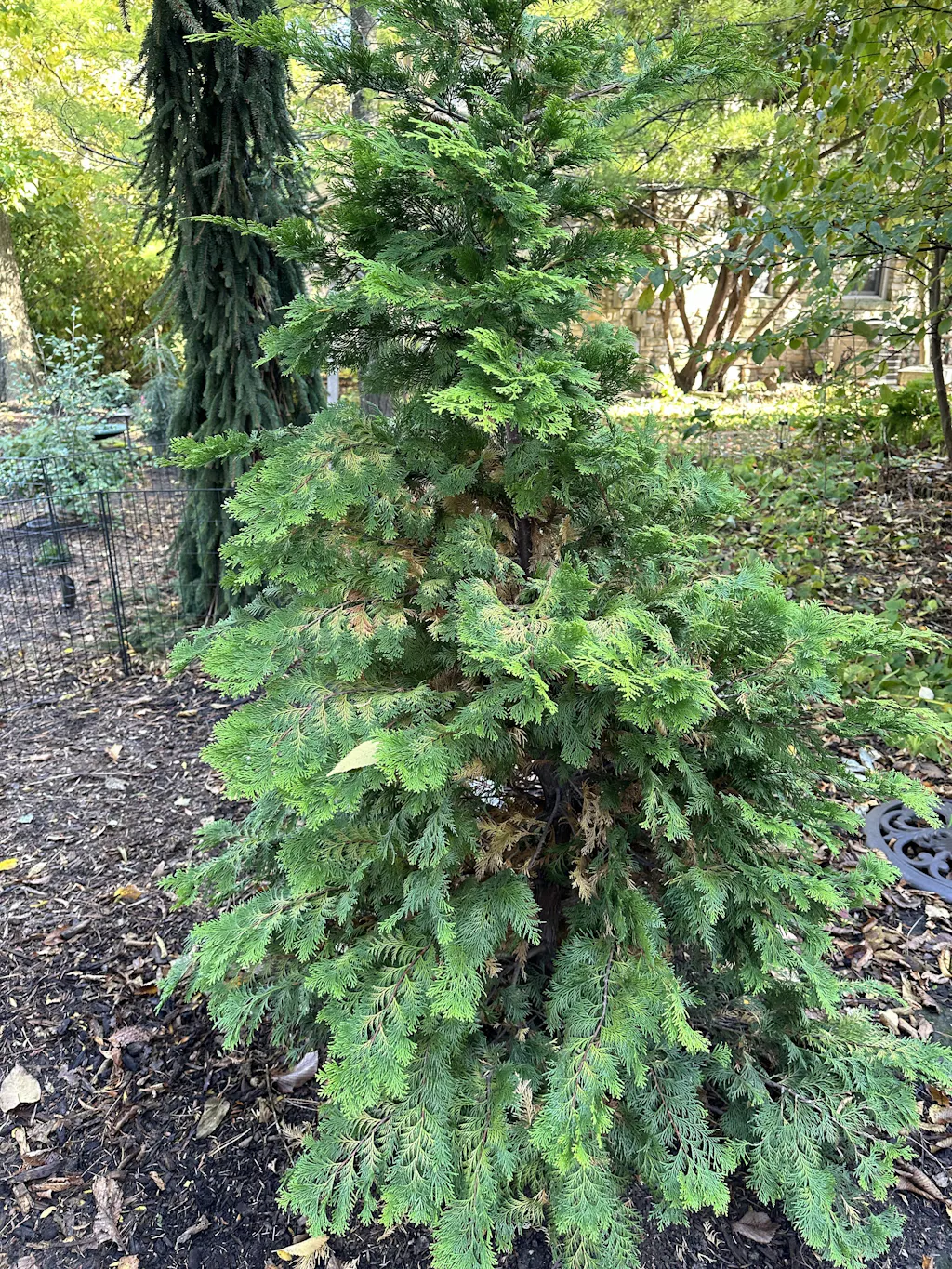
The innermost leaves that are shaded will often be more green than the bright golden leaves on the branch tips, creating a pretty two-tone effect. Likewise, if Crippsi is grown in part shade, it won't be as intensely yellow as it would be in full sun. In shade, it will also have an airier habit. Once you catch sight of the feathery yellow-green fronds, you'll fall in love with Cripps. An excellent option for a soft background to your favorite flowering plants, Cripps will make itself at home in your landscape with its vigorous vertical growth. Cripps is also a great option for a more non-traditional privacy hedge or a windbreak.
Planting Zones
Hardiness Zone: 6-9

How To Plant Crippsii Hinoki Cypress
Crippsii Hinoki Cypress is most at home in moderate climates that aren’t extremely hot in summer or bitterly cold in winter. Protection from subfreezing winds in the form of a windbreak that deflects the prevailing winds is also helpful in preventing windburn (browned foliage) that can occur. Crippsii appreciates regular water, but won’t abide “wet feet.” Otherwise, this star ornamental is pretty much trouble-free. You can trim the branch tips on a regular basis if you’d like your tree to develop a denser habit. Letting it grow naturally will result in an equally lovely but more open form.
How To Water
Water twice weekly for the first 3-5 weeks; then water weekly for the remainder of the year until winter. When you water, water very slowly and very thoroughly. The water needs to reach to the bottom of the root ball and that takes time. Watering needs may be altered due to extreme weather conditions.
How To Prune
Prune back dead branches as well as any that are out of place, pruning should take place during the summer months.
Frequently Asked Questions
Yes. Crippsii holds its golden glow year-round, with the brightest color typically in full sun. In colder climates, a bit of winter bronzing can occur, which is normal for many evergreens.
Very little. It naturally forms a tidy pyramidal shape. If you want to refine the outline, lightly prune in late winter, focusing on small, selective cuts rather than heavy shaping.
It is generally considered deer resistant, especially compared to many broadleaf evergreens. In areas with high deer pressure, young trees may still benefit from protection while establishing.
Customer Reviews
My Crippsi Hinoki Cypress was spectacular! It will be the focal point of my front yard.
Dolores, thank you so much! We’re thrilled your Crippsii Hinoki Cypress arrived healthy and spectacular — it’s a showstopper of a tree, and we love that it’ll be the focal point of your front yard. Thanks for growing with Bower & Branch.
I cannot say enough about the beautiful Crippsii Hinoki Cypress tree I received. It has been planted in a spot where we can see it in our back garden. It shines in green and gold. Its branches drape wonderfully. I only wish I could have afforded more and had another good planting spot to give an other tree a proper home in my partially shady garden.This one stands out as a focal point, no mistaking its elegance.
My 3rd tree from B&B - very pleased. The tree took quite awhile to arrive (delivery issues), but was perfect when delivered - very healthy and large! I'm a repeat customer and will continue to be so. Customer service is top notch. Thank you Bower and Branch!