Why Plant Gala Apple?
Even though it’s often stored for months and then shipped halfway around the world before ever reaching the produce aisle, Gala is one of America’s favorite apples. So just imagine what a ripe, juicy, FRESH Gala apple will taste like when you pick it off your own tree! After you’ve grown your own Galas, you may not be able to go back to supermarket apples again. This sweet, fragrant apple is tops for packing in a lunch box, and it also cooks down into a delectable applesauce, making it a little easier for even the pickiest eaters of the family to get their “apple a day.”
The Gala Apple Tree was hybridized in New Zealand in the 1930s by James Hutton Kidd, an English-born fruit grower who, sadly, didn’t live to see the wild success of his introduction. Kidd died in 1945, and the Gala Apple didn’t go into production until the 1960s. It didn’t enter American markets until the 1970s. To create this wonder apple, Kidd first crossed Cox’s Orange Pippin, a beloved British dessert apple, with Red Delicious. Then he crossed the resulting hybrid with Golden Delicious. It took several years for the seedlings of each pairing to bear fruit and reveal whether they were worth keeping or not, but in the end, the patience of Kidd and the breeders who carried on his work paid off.
How to use Gala Apple in the landscape?
Your garden will be a gala in spring with this tree’s fragrant apple blossoms, which are soft pink in bud, opening to white. Bees will eagerly work the flowers, ensuring that there will be a good crop of apples to follow if a suitable “pollinizer” is around. Gala is partially self-fertile, which means that it will set some fruit on its own, but crops will be heavier with another Apple Tree, such as Granny Smith or Honeycrisp, nearby. Most Crabapple Trees, like Royal Raindrops®, Prairie Fire, or Louisa, will also do the job if you decide that one Apple Tree is plenty for your family.
Planting Zones
Hardiness Zone: 4-8

How To Plant Gala Apple
The Gala Apple Tree isn’t difficult to keep alive, but to make it really thrive and to get a good crop of healthy fruit from it does require a bit of know-how. Plant this tree in an open, sunny area in soil that is well drained. Avoid planting it in a low area of the landscape or “frost pocket” (although Gala does show more tolerance to late frosts than other Apple Trees). It has a low chill requirement and is well adapted to areas with mild winters. Now for the bad news: Gala Apple is highly susceptible to both fire blight and apple scab. These diseases can be controlled by preventative sprays.
How To Water
Water deeply, and regularly during its first few years in the ground. Irrigate weekly, and especially during long dry spells or extreme heat after it’s established.
How To Fertilize
Incorporate Elements Starter Plant food granular form into the soil when planting. If planting in spring or summer, start fertilizing late fall using Elements Starter Plant food granular form on an annual basis each late fall. Continue this for the first three years to get your plant well established.
How To Prune
Always promptly remove and destroy any diseased branches, leaves, or fruit from your Apple tree and around the base. Leaving those in place could cause reinfection the following year.
How Does Shipping Work?
Bower & Branch Trees, the real BIG trees, don’t fit in a box! Our big trees, sizes XL and bigger, require expert delivery and care, that means our extra-large trees are shipped on Bower & Branch trucks. We are the only ones who know how to ship our big and bigger trees and plants with tender loving care. We deliver your trees and plants directly to you. Ask Bower & Branch about planting services – we'd be happy to assist in installation.
*For Big trees and Shrubs, Size XL and bigger: Review our Seasonal Shipping Timelines and Policy here.
Your trees and plants are grown across the United States at various Bower & Branch Growers. Depending on your location, your plant orders may be shipped from various locations. Please expect orders with multiple items to be delivered over a number of days as a result. Orders made up of numerous items or selections will not arrive at your home on the same day.
Shipping Delays:
From time to time, Bower & Branch Growers may determine to delay order shipment based on various factors for plant health. Weather in your region, as well as, where your plants are grown, is always considered when shipping. Extreme weather conditions may delay some or all of your order. Bower & Branch allows our Growers to make final shipping decisions based solely to benefit your trees and plants’ health and success.
How Does Sizing Work?
The size of our trees have nothing to do with the container size like you may find elsewhere–big doesn't mean just height - it’s also vigor, age, and overall health. Other online retailers are going to tell you that a plant is a seven gallon, that means nothing to your tree or plant (or you.)
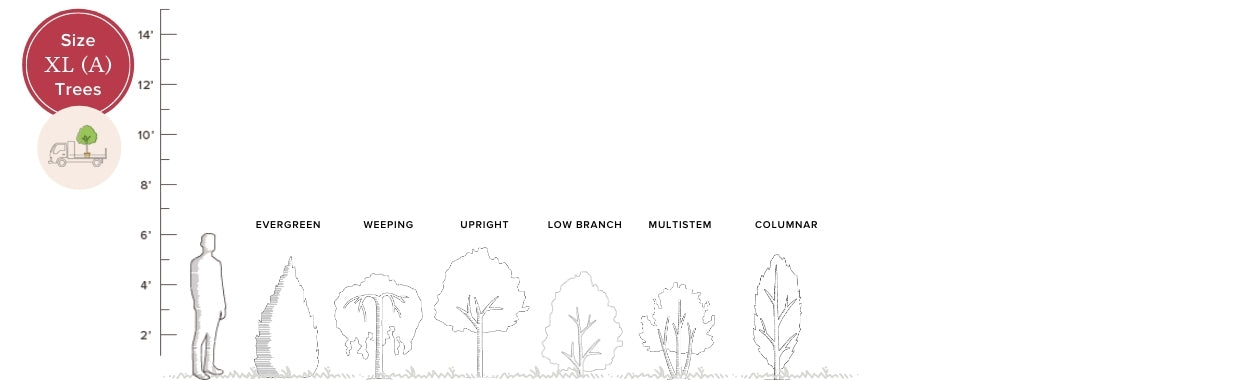
Our trees for sale online are graded on large, x-large, and even bigger sizes. This is because our trees are sized by their age—the higher the letter, the more mature the tree. The age determines the trees’ overall height, size of the trunk and the overall branch density.
All of these characteristics are what you should be looking for when choosing a tree for immediate impact and instant curb appeal. Our extra-large tree and plant sizes are sure to wow you and your neighbors!
See the size guides below.